the better truth

the better truth
Showing posts with label Alex Garland. Show all posts

Friday, March 09, 2018

Annihilation (2018)

To The Lighthouse: A Review of Annihilation

“Our apparitions, the things you know us by, are simply childish. Beneath it is all dark, it is all spreading, it is unfathomably deep; but now and again we rise to the surface and that is what you see us by.”― Virginia WoolfTo the Lighthouse
“Give me the splendid, silent sun with all his beams full-dazzling.”― Walt WhitmanLeaves of Grass


Alex Garland would appear to be an ideal director for a science fiction thriller based on aliens. He wrote Sunshine, a compelling outer space adventure that is a modern day “Heart of Darkness”. This crew is haunted by a “Kurtz” who becomes religiously obsessed with his surrounding. Garland also wrote and directed the exquisitely rendered Ex Machina, where another myopic lunatic experiments with artificial intelligence. Garland’s latest, Annihilation, has the aftertaste of a bad meal prepared by a trained chef. Was it the director’s intention to, metaphorically, combine Virginia Wolfe’s spiritual journey “To the Lighthouse” with James Dickey’s seminal endurance test, Deliverance and the horror classic The Island of Dr. Moreau? Perhaps adding the garnish of Daytime TV and a smattering of video flashback gore from the space horror classic Event Horizon was an attempt to salvage the main entree. Unfortunately the pudding lacked a theme. The rehashing of the proven ingredients led to a stew of tired troupes. Even the opening, aliens crashing in a meteoric fireball, failed to live up the identical sequence in the thematically similar 1997 feature, Smillia’s Sense of Snow. There is an uncomfortable tired opaqueness that permeates the alien’s lair. Literally.
The space invaders build a cocoon in which the laws of nature are reinvented in a semi-translucent prism that bends everything, including light and DNA. The Government takes action by setting up an encampment outside this ever-growing web. Three years of expeditions into the abyss have yielded an almost perfectly casualty rate of scores disappeared and presumably dead. The one returning soldier, the protagonist’s spouse, is in a coma. The government has little understanding of the phenomenon, except that it is growing exponentially from an old lighthouse, which marks the initial point of impact. Given this bleak track record, the last course of action would be to send in, yet another, team of soldiers. This turns out to be the plan. Needless to say red flags start appearing almost immediately in the artistry as well as the plot.
Garland should be commended for creating a team of women scientist soldiers to fight the forces of the rainbow gauze. It is probably the first time such a diverse sorority with such impressive CVs has come to do battle in the context of mainstream American feature films. Despite their varied backgrounds, from biology to chemistry to strictly fighting, they are troubled souls with full knowledge that this is probably a suicide mission. The premise held the suggestion of heroism but this unlikely band of heroes is undone by stupidity. There is never any explanation of the overall game plan. They march around on foot. Why not bring vehicles? What differentiates this endeavor from all the past failures? This sense of absurdity is compounded by the events once inside the magic dome. There is painful exposition that attempts to establish background and motivation. This has the opposite effect of making the action seem forced and the camaraderie appear inauthentic. It is interesting to contrast this band of star crossed warriors with the scientists in Garland’s Sunshine. That group is also trapped in a light cage, but the audience never questions their friendships or decisions.
The curse of the aliens is creating a primordial soup on a molecular level. All living things merge in a horrific breakdown. Deer become flowers. People become bushes or have their inside turn into eels. It is interesting that birds and insects seem immune or perhaps the fx budget failed to cover those classes of creatures. The setting shares the identical problem that plagues the characters, an unfulfilled promise of what might have been. What does it mean to live in a world where, on a cellar level, everything is intermingling? This film fails to shed any light, even a diffuse ray, on the answer. Instead we are left marveling at the gore of a bodies turning into plants and a bear that has the ability to scream with the exact timbre of voice as its last victim.

Garland’s folly might have been palatable had the film limited itself to being a shooter game in the context of a bizarre world. Unfortunately the writer/director created a ‘love triangle’ preface and ‘deep moment’ coda that are unforgivable for an artist with Garland’s proven ability. The presentation of Natalie Portman and Oscar Isaac is the stuff of telenovelas or cruise ship commercials. It is as if two contestants on the dating game were asked to strip to their draws and pretend they were a passionate married couple. The gory scenes in the alien jungle trigger nausea as do all the intimate moments between the lovers including the third wheel of the triangle. The lack of chemistry combined with dialogue gleaned from greeting cards snuffed out the ability of the talented performers to practice their craft. It would be interesting to know what alien force invaded the artistic process. Perhaps a word from the bean counters at the studio? One can imagine the orders coming down from above: this film needs some romance! Too bad the powers that be never recognized Garland’s strength, as shown in Ex Machina and Sunshine. He is the master of portraying zealots, not lovers.
The ending sequence was laborious in a different manner. The lack of cohesion in the narrative was masked in the borrowings from numerous past films in the hope of making a grand statement. The extraterrestrial lighthouse cave brought to mind the crash site of the spaceship in the original Aliens. The wrestling sequence called to mind a strange combination of Bergman’s enigmatic meditation on individuality, Persona; weirdly grafted with the professor/scientist quest for truth in Altered States. The love story hinted at the couple reconciliation in The Abyss. No doubt there are scores of other references and the end result is piecing together a clever jig saw puzzle from frames of movies past. There is some satisfaction in coming to an understanding of the artist’s vision. Unfortunately this epiphany never holds a candle to the enlightenment of meditating over a masterwork. One can spend spend decades reading the supposed meaning of Persona or 2001 and feel we are are on a path to some better understanding, not just of the film, but of ourselves. Annihilation leaves us in a murky morass of solving riddles produced by inferior artistry. In the end we are left with Natalie and Oscar hugging in a unification of their “otherness”. This ties to Natalie’s original lecture on cell biology. Her character, a professor of biochemistry explains all living things started from one cell. It divided into two, then four, then eight and that produced everything and everyone. The conceit is that this new Adam and Eve are going to spell ANNIHILATION for the human race. The problem lies in parsing all the light-show gobbled-gook which shows, for the first time, the alien presence cohesively piecing together a clone of the heroine. This suggests her re-appearing partner is also born of the same process. Natalie, however, has cleverly managed to subvert the alien and retain the bulk of her own personality. Interestingly, rather than reject her spouse’s doppelgänger, she gives him a hug.
Perhaps a stronger title for this film would have been Alienation as the real story is the tension between isolation and being a part of the larger group. Natalie plays Crosby Still & Nash’s “Helplessly Hoping” when her spouse returns. The chorus is:
They are one person
They are two alone
They are three together
They are for each other
The film shows that the intermingling of DNA points to the idea in the first line, i.e. we are all one. Annihilation certainly hammers home the notion that individuals are always living Thoreau’s “lives of quiet desperation.” The major failing in the work, however, is the inability for Garland to muster an answer to CSN’s “together” and “each other”. The characters in the film are bound by their pathologies and, unlike an AA meeting, the camaraderie is based in the disease rather than pursuit of a cure. There is never a sense, until the closing hug, that anyone is “for each other”. This action, finally, introduces a glimmer of the aliens’ point of view. Who are they? What do the want? Domination is such a primordial human emotion that the embrace hints that, despite all the grotesque garnish, these beings are our twins. Perhaps that was the point but Garland’s failure to shed light on their perspective leaves us in the dark. This is ironic.
from Pudding Cool

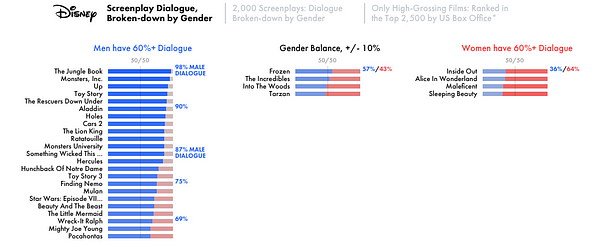
Light itself played a major role in Sunshine and deserves to be named as a supporting character in this film. It is enjoyable to bask in the endless cutaways of rainbow sheen. It is also wonderful to see a film with so many compelling female leading roles in light of the dearth of material historically available. (If anyone doubts this please read the data available regarding film dialogue broken down by men vs. woman)
This film might have had the audience pondering whether plants have morality or if bacteria feels pain. Instead we gawk at a deer-like creature with flowers for antlers or squirm at truly monstrous effects of cross-breading. It is as if this director has turned to the interests of a 12 year old boy pulling the wings off flies in the guise of focusing on philosophical/ scientific questions. Hopefully this is a passing phase. Unfortunately interesting ideas and progressive casting fail to deliver a garland to Garland. A lighthouse is no good without a lighthouse keeper.

Saturday, May 30, 2015

Ex Machina (2015)

Ex Machina (2015)
Don’t Be Evil

“With artificial intelligence we are summoning the demon”― Elon Musk at MIT Aeronautics and Astronautics Centennial Symposium, from Washington Post Article “Elon Musk’s nightmare: A Google robot army annihilating mankind”  May 13, 2015


Is Ava an ingenue in Alex Garland’s “Ex Machina”? That simple question is at the heart of this compact science fiction thriller based around the relationship between humans and sentient machines. Ava is a robot guided by extremely advanced algorithms. Does she have feelings?  Who deserves to be accorded de jure dignity and respect? Given our species track record of exploitation and domination, is it an act of suicide to extend the franchise to non-humans?  Apes, dogs or octopus’ are not an existential threat to mankind so the debate about according our fellow animals rights plods along at a comfortably sleepy academic pace. Computers, however,  manage the opaque programming of modern life. Our reliance on these unseen machines grows in tandem with a sense of dread about their ability to reek havoc.  This gives rise to the unsettling question: are they like us? Do they deserve to be treated as something other than pieces of metal, glass and plastic? Mr. Garland’s foil to explore these questions is a young computer scientist, Caleb, who is selected to take part in an experiment by Nathan. The latter is an amalgamation of many Silicon Valley pioneers. Sergey Brin, who as head of Google, has spent a fortune acquiring artificial intelligence and robotics companies without revealing his intent. Nathan’s unfathomable intellect and arrogance also brings to mind Peter Thiel, who has stated a desire to be eternal by merging with a machine, and Elon Musk, who has stated he wants to live on Mars. All these people have the resources to explore their dreams and the shear force of personality to make even the most skeptical non-scientists wonder. Nathan has the audacity to believe his intellectual strength makes him divine. Caleb is merely an apostle documenting, confirming and being programed to spread the gospel. 

Mr. Garland has a knack for exploring big ideas in confined spaces. “Sunshine”, which he authored, shows the fate of half a dozen people confined to a spacecraft. The writing is superb as the characters are in a battle with their sanity in addition to the the elements. “Ex Machina” also uses a small cast confined to one set. Garland’s directorial debut shows that his talent goes beyond the written word. The plot is spare. A young computer engineer is called by his boss, a world renowned computer genius, to take part in an experiment.  The acting is pitch perfect. Nathan is as arrogant as Caleb is callow and Ava is alluring. The actors bring an international perspective shared by the real life tech tycoons. Brin, Musk and Thiel were all born outside the United States. Oscar Isaac, who plays Nathan, is a naturalized American born of Guatemalan and Cuban parents. Domhnall Gleeson, the eager Caleb, is Irish.  Alicia Vikander is Swedish. It is a mark of their talent that they completely suppress any old world charm. They all exude a particular brand of American ambition that could only be born of new culture that abandons ancient truths for the allure of innovation. Nathan has the hardboiled entrepreneurs' obsession with fame and standing. Caleb has formidable technical prowess saddled with a childlike belief in the goodness of science and rich powerful men. Ava is myopic in the manner of a brilliant American graduate student unencumbered by weighty questions in pursuit of actionable knowledge. This unlikely combination of strivers are on a collision course with existential questions.

The setting is a modernist cement prison. It is the kind of pretentious, flashy unlivable home that only a tech wizard would choose to inhabit. It brings to mind Apple Computer’s co-founder (the other Steve) who incorporated an actual cave in his large ranch-style house. Caleb adapts to being put in a windowless cell with a door that automatically locks. His mentor explains he should think of it as merely an extension of the lab and not really a home. This small moment speaks to an ideology both these men share. Sometimes it’s important to sacrifice one’s humanity for the greater good of Science. Nathan has made his fortune designing a Google-like internet behemoth which he uses to glean information about how human’s interact. Studying the “traffic” can yield a great deal of information without delving into the minutia. It’s akin to the National Security Agency’s massive data sweep. There is no need to have the specifics of a conversation as the raw data of who and when you called can reveal the larger truth. Nathan never gives this nefarious example but he poetically shows that in creating his robots he has tapped, metaphorically speaking, all human knowledge. He twists Caleb’s banter around to hint that Caleb thinks Nathan a god with the power of creating beings. Caleb states that is not what he says or thinks.  This forces Nathan to repeat the misrepresentation with greater force. What does it matter what the lab rat thinks? Caleb confirms his status by abandoning any hope of correcting the word from on high. 

There is a constant waxing and waining of trust as Caleb is lured down his maze. At first Nathan’s brilliance excuses his rudeness but his brutality becomes too much for the gentle Caleb.  The young scientist becomes Ava’s knight in shinning armor. This is according to Nathan’s plan. Ostensively he is there to perform a “Turing Test”. “Ex Machina” gives relevant exposition. Turing, the father of modern computer science, asked the question whether computers were capable of thought. Since defining the act of thinking is difficult Turing re-stated the test question: ”Are there imaginable digital computers which would do well in the imitation game?”.  There is a great deal of dialogue surrounding the nature of whether or not, Ava, the android, is actually thinking or merely mimicking. Strangely there is no mention of the fact that Turing himself negated the issue by stressing imitation rather than actual thought.  Caleb is bogged down in the mechanics which exasperates the impatient Nathan. He uses various analogies including referencing one of his paintings by abstract expressionist Jackson Pollack to “prove” that Ava is a sentient being. Perhaps the creepiest moment of the film occurs when Nathan decides to show his pupil how to stop thinking and “let go”. He has caught Caleb fending off the sexual advances made by Nathan’s servant/consort. Caleb fears Nathan’s fury. Anger might be an appropriate response of someone discovering a lover secretly involved with a friend. That would be in the world of well adjusted mammals. Caleb is in the presence of a sociopath and his army of Stepford Wives. Caleb is dumfounded as Nathan turns up the music, swills his drink and performs a perfectly choreographed disco routine with the servant. The precision of Nathan and his companion imitating each other is, at first, comic. Then, as the music progresses, the scene takes on a sinister hue of joyless excess. As an aside, Jackson Pollack killed himself and a fellow car passenger during a night of revelry.

Mr. Garland’s use of costumes and grooming elegantly supports the dystopian themes. Nathan shares the same huge beard and closely cropped hair of fanatical terrorist leaders. It is in the seduction of Caleb, however, that Garland hits his mark by brilliantly parsing Ava’s body. The face and hands are completely human but the rest of her, including her hairline and neck, are overtly mechanical. The overall impression is a human conjoined with an extraordinary, hand crafted modern Swiss watch. The divide between man and machine becomes apparent during a sequence where Ava puts on her clothes. Caleb is told to cover his eyes. She coyly slips on a dress evoking a transition into being a young girl aware of her sexuality. Caleb peeks through his fingers. The is a sweetness to the moment due to his inexperience. He is twinned with her assuming the role of a young innocent crossing the line into the murkiness of sexuality. This scene of Caleb gazing on his love interest is repeated in a thematically mirror image. Towards the end of the film Ava is covering her body with skin while Caleb is imprisoned in a neighboring room. No need to tell him to shut his eyes as that would hint that she cared. She doesn’t. Strangely this makes her very human, but in a postlapsarian sense. His naive fairytale romance turns into a very mature power struggle.  Ironically Genesis is rendered in reverse as Ava escapes the gray stone darkness into a Garden of Eden at the heart of the Rocky Mountains. Garland has placed Nathan’s laboratory/home in a secluded sylvan oasis which echoes Ayn Rand’s “Galt’s Glutch”, the community of like minded genius’ who come to dominate the world of inferior collectivists. As an aside it is interesting to note that Rand’s key disciple, Nathaniel Brandon, shares Garland’s lead character’s first name. “Ex Machina” has taken this Randian dream to its logical next step in that Nathan’s “community” consists of Nathan and his carefully tailored robots, which are based on serving his needs. Not surprisingly, Nathan is a raging alcoholic who tempers all his solipsistic soliloquies with large amounts of beer and whisky….. When he isn’t terrorizing Caleb, he works on his computers, rapes his androids, eats gourmet meals, blasts loud music and indulges in long bouts with a literal punching bag. There is an amusing moment when Caleb first encounters the mad genius that illustrates Nathan’s complete isolation. He is referring to the wild time he had the night before. Caleb assumes he had thrown a large party. Nathan is offended by this suggestion. As if to say “I don’t need anyone else to have a great time”. Nathan then unwraps his fists as he has just been whaling away on the punching bag. He escorts Caleb to his windowless cell/room where he bullies him into signing a confidentiality agreement. Nathan might be the paradigm of scientific brilliance but he fails to be much of host or companion and some might argue, human. 

Although Garland has delivered an exceptional film debut the android world view is absent.  Ava is intriguing but opaque. During Caleb’s inquisition, which morphed into an extended date, he asks her an hypothetical question: where would you go If you had the choice of visiting anyplace on earth? One can assume, given her lightening sharp responses to all manner of inquiry, that she has been imbued with vast knowledge of the world. It is also made clear that she has never experienced anything outside of the small confines of her dark room. Ava’s response gives a glimmer of what is behind that beautiful face mask. She would enjoy visiting a very busy automobile intersection in any major urban area. Caleb is gobsmacked and pushes her to explain. She is interested in people watching. Strangely the inquisitor never pushes for the reason behind her unusual destination fantasy. As audience members we can assume Garland is drawing a parallel with Nathan. Her creator watches humans via his unfettered internet empire and his spawn tries to understand humans via a similar disengaged vantage point. The vehicle intersection is of interest as it delivers a vast quantity of ‘data’ about human behavior. The real questions is to what end Ava would find this useful. This is never addressed  Her mentor is an open book. Nathan tipped his hand with his adolescent fantasy about being a godlike man with the ability to create life as well as snuff it out. His motivation is to be a hallowed figure in human history. He speaks of a time when Caleb will proudly share witnessing the birth of Ava with his grandchildren. His supposed acolyte’s response: only if his grandchildren had signed confidentiality agreements. Caleb pokes at the absurdity of wanting to be a seminal figure in the human community while possessing contempt for all of his fellow beings. Ava, however, remains enigmatic. Does she share her creator’s disgust with humanity? Does she have ambition to dominate?

There is a sequence which features Ava and another android conspiring against their creator. Caleb has, through reprogramming the lock down features of the lab/prison, untethered Nathan’s metaphorical children. This dysfunctional family encounter unfolds in the same manner as one would expect of a purely human cast of characters. Garland carefully stages the brutality with a clumsy ambiguity which blurs understanding the robots’ motivations. There is a moment where Ava whispers to her counterpart. One can assume that Ava, as the dominant figure, is giving instructions, but there is an odd sexual tension in the exchange. As if these two robot children were about to play doctor. Nathan breaks up the strangely tender moment by suddenly bursting in carrying a club and barking orders. The ensuing confrontation ends in a crescendo of violence. It is fascinating to observe Ava’s clearly nefarious actions leading to her liberation. It would have been more enlightening, however, had Ava spent more time with the other robot. To borrow a question which was the title to the original novel which turned into the film “Blade Runner”: “Do Androids Dream of Electric Sheep?”. Do they have a subconscious?  What is in at the root of their motivation? Who is Ava?

The theme of humans being seduced by their mechanical creations is as old as the 18th century “Tales of Hoffman” and has been revived on numerous occasions. “Ex Machina” bears a resemblance to an original Star Trek episode “What Are Little Girls Made Of?” produced in 1966. This work features a scientist, Dr. Korby, who has realized Thiel’s dream of morphing with an android. At the same time Korby exhibits Nathan’s vision of dominance and attempts to reinvent mankind with his army of robots. The problem, of course, is when one engineers robots to imitate humans they become as fickle and uncompromising as their real world counterparts. The brilliance of “Ex Machina” is that the struggle is focused not on man vs. machine but man vs. man; specifically Caleb’s revenge due to Nathan’s mistreatment. Thematically this film has a strong connection with “In the Company of Men”, a stark rendition of a dominant male figure who forces a colleague to toy with a deaf woman, knowing that the result will end in broken hearts. In both films the justice for the wronged party goes awry.  The takeaway is that treating your fellow beings as merely objects can never end well; for anyone. “Ex Machina” extends the lesson to non-humans. It will end badly for ‘anything’ as well.

Perhaps Nathan could have recomputed his behavioral algorithms based on Isaac Asimov’s “I, Robot”. This 1950 anthology of science fiction stories lays out “The Three Laws of Robotics”

1.A robot may not injure a human being or, through inaction, allow a human being to come to harm.
2.A robot must obey the orders given to it by human beings, except where such orders would conflict with the First Law.
3.A robot must protect its own existence as long as such protection does not conflict with the First or Second Law.

As Asimov’s fiction progressed so did the power of androids. His stories featured robots controlling governments and, by default, civilization itself. This prompted a revision to the three laws with a law that precedes all others. It was nicknamed the zeroth law: 

0. A robot may not harm humanity, or, by inaction, allow humanity to come to harm.

Interestingly Asmivo continued to wrestle with these questions and, in 1974, published the short story “…. Thou Art Mindful of Him”. Two robots void Rules #1 & #2 and shift the emphasis to #3’s protecting their own existence. The androids come to believe they are superior to humans. Does Ava share this conclusion? Garland never says. “Ex Machina” is a wonderful journey into the battle amongst humans. It is prescient in that the heroes of our time are as deluded as the villain in the film. If anyone feels that Nathan is overdrawn then consider Peter Thiel’s funding of “The Seasteding Institute”. This organization explores the building of communities on floating islands that drift in international waters devoid of any control by evil collectivist governments. Perhaps this is where Thiel can explore his dream of living forever and merging with a robot. Maybe he missed the “What Are Little Girls Made Of?” parable. More likely, like Nathan, he feels he has the upper hand. Garland knows he doesn’t. So does Elon Musk, who is nervous that Sergey Brin is on course to violate the Zeroth law. Once again Garland should be praised for a wonderful work of art that brings the debate front and center. It would have been very interesting to know more about Ava. Unfortunately mankind might find out soon enough. And not in the safety of a movie theater.