the better truth

the better truth

Tuesday, March 27, 2018

Black Panther (2018)

Black Panther (2018)

The Revolution Will Be Televised
“The poverty program was not designed to eliminate poverty”― H. Rap Brown
“I’m not Walt Disney. I do a lot of things Walt Disney wouldn’t do. Walt Disney doesn’t smoke. I smoke. Walt Disney doesn’t drink. I drink”― Walt Disney, PBS American Experience: Walt Disney
“We never see clearly what we over-identify with”― Craig Chalquist, Essay: Why I Seldom Teach the Hero’s Journey Anymore

Walt Disney studio’s Black Panther is, presently, the most popular film on the planet grossing over a billion dollars in sales in just over a month. It is not uncommon for features based on Superheroes to dominate the box office, but this is different. It is novel to see a big budget feature composed almost exclusively of people of color. It is also a welcome surprise to see so many women in dominate roles as warriors and scientists. But the appeal is not due to tackling black empowerment or the first rate craftsmanship.The film’s resonance lies in the superhero taken part in an overt political upheaval. This theme dovetails with a global uprising against established elites. It is important to remind ourselves that Walt Disney company is interested in revenues, not politics. This “revolution” must sell tickets. In that respect it is a triumph of harnessing the socio-economic zeitgeist, rather than advocating dangerous ideas. Think of it in terms of product. Coke is the “real thing”, but a soft drink can never get “too real”. Ditto for our African Prince. He is the suggestion of revolution, rather than a revolutionary.
The structure of the film relies on familiar plot devices. We have a world threatened by those coveting a valuable resource, vibranium located in the kingdom of Wakanda. Think of the unobtanium in Avatar. Our superhero possesses technological prowess, think of the James Bond or Mission Impossible franchises. There is a family feud of biblical proportions, think Luke Skywalker and his father. The challenge in these films is to seamlessly integrate the eternal quests with the pyrotechnical displays. The battle or chase must not feel disjointed from the exposition. The first half hour does a commendable job of giving the history and background. Wakanda is a land that, although economically rich, safeguards itself behind the facade of being a “backward” third world nation. The story relies an internecine struggles within the extended family, think of the Hebrew bible rivalry between Isaac and Ishmael. Unfortunately the original sin, a fratricide involving two princes, is muddled. It becomes unclear why the Prince’s son is left abandoned in an American ghetto. Since this is a revenge narrative it is problematic for the motivation to be opaque. Why does Wakanda station spies in foreign cities? Was it really necessary for one Prince to murder the other? This flaw is obscured by fast moving action sequences in which the various wronged parties are assigned their “good” and “bad” roles. Ironically the violence would have been enhanced with a better understanding of the setting and grievances.
The storyline is dynamic. The Wakanda world has it’s own internal struggles. The writers took the sylvan paradise city of Shangri-La from Lost Horizon, and infused it with gadgetry from the futuristic cartoon The Jetsons. This split has a political tinge as there is an internal kingdom of luddites who eschew all modernity in favor of the old ways. Despite the interesting narrative the screenwriters stumble in shaping the characters. There is an inordinate amount of time wasted creating Ulysses Klaue, a classic superhero villain who traffics in underworld crime. He is quickly dispatched in a sequence where he organizes the theft of an artifact, an ax made of vibranium, being held in the British museum. This weapon, whose existence leads to a complicated interaction with a CIA agent, also vanishes from the plot. These blemishes pale in comparison to the quiet, non-action, dialogue. These sequences are merely book-marks segregating swords clashing, rhinos charging and space ships blowing up the scenery. The banter between family members, prominent officials and intimate companions is wooden. One feels as if the characters should have turned to the camera and stated the scene’s intention: “I am the funny younger sister and I have a jokey relationship with my brother” or “I am the former love-interest who is in still interested” or “I am the general who will follow the rule of law over emotional considerations”. The comic book origin of the project unfortunately seeps through in these embarrassing interludes.

The writer/director, Ryan Coogler, had a great deal on his plate balancing so many intricate facets. Sadly the spoken word took a back seat to special effects, scenic and costume departments. Kudos to the integration of African motifs, designs and music. They were delightful and avoided the trap of being overtly patronizing. Given the history of Western exploitation of Africa, Coogler must have been weighing the ramifications of appearing insensitive in every single frame. The contemporary movie industry relies on world distribution for their product so a misstep would have clear economics ramifications. Thus far, foreign receipts for Black Panther make up half of the total revenue. This wasn’t the case in the early 1950s when Walt Disney produced, Song of the South, a paean to antebellum Dixie featuring a live action plantation hand, Uncle Remus, as the narrator. Not only was the studio indifferent to foreign revenues, they had no qualms about alienating people of color. Times have changed. Song of the South has been out of circulation for decades in any format. Disney’s new found social conscious has recently produced Zootopia, an animated feature that preaches against the evils of stereotyping and racism. There have also been other recent forays tapping other cultures: Moana (2016) has a Polynesian motif and Coco (Coco) revolves around the Mexican day of the dead tradition. Disney hired an army of experts to supply enough ethnographic detail to mask the uncomfortable history. Black Panther brings this Disney oeuvre to Africa, which is a peculiar setting for a comic book money machine. There is also the conundrum of avoiding the idea that this film is overtly anti-European.
The two central Caucasian characters share the bifurcation of the two rival Princes, T’Challa and his cousin Killmonger. One is a sanctioned paradigm of virtue whereas the other is outside the law. The colorful arms dealer/assassin/terrorist, Ulysses is, unfortunately, eliminated after two brief appearances. Everett K. Ross, a CIA agent ally, joins T’Challa and fights the good fight by using his pre-spy skills as an air force fighter pilot. This is where Black Panther’s forays into history become questionable. Is it appropriate for the “good guy” to be a member of the American spy agency that, among other things, betrayed Nelson Mandela to South Africa’s Apartheid government? Once again Black Panther is light entertainment, not history. But the choice signals a larger theme of sanitizing real events to give an upbeat gloss. Yes the CIA is involved, but unlike the bad ole days, they are a benevolent force supporting a just cause.
This breezy appropriation of real life is also illustrated with Nakia, T’Challa’s love interest. She pursues social justice instead of resting on her laurels as a powerful figure in the Wakandaian court. She works with enslaved women who are caught up in a “Boko Haram” hostage situation outside the kingdom. The Prince personally brings her back to witness his coronation. Interestingly the film eschews the standard ploy of having the estranged couple unite after their adventure at the end of the story. The Prince evolves to adopting her worldview of tending to the needy. Interestingly the denouement centers on America, not Africa. T’Challa appoints her to run a social center in Oakland where the “evil” cousin was raised. This reaching out to outsiders is a direct rebuke to his father, the former king, who was a hard line isolationist. The kingdom will now engage with non-tribal people within a safe context. The United States, the richest country in the world, is chosen as the area most in need of foreign aid. It is another strange twist in a film that is riddled with odd contradictions. What about helping Africans? The truth is trying to shoe-horn the new treatment of neighboring countries would raise too many unsettling issues. Does Wakanda accept refugees? Does economic support include technological transfers information? Cash payments? What sorts of governments would they support? These questions seem ludicrous, except when you consider that the filmmakers chose to set the story in this particular geographic location and make overt references to contemporary political trends.

The Black Panther himself faces a unique black superhero burden of having to define “evil”. Batman, Superman, Spiderman and the pantheon of superheroes are at war against generic badness. There is no righteousness in the backstory of the Joker or Lex Luthor. But what about Killmonger? This is a chosen son who was abandoned to the harshest of city streets. Prior to his life of crime he lived a Hortio Alger story and became a decorated military hero. Most importantly the motivation for teaming with Ulysses was not riches or self aggrandizement. It was a part of a master-plot to re-take Wakanda in the name of his dead father, who was murdered by his uncle, T’Challa’s father. Rather than a venal sociopath, he might be seen as a hardscrabble Robin Hood . If Black Panther spawns a prequel, it would be interesting to cover this avenging angel’s backstory in the gang-ridden streets of Oakland. The kingdom of Wakanda would be an arrogant refuge in need of a revolution, rather than a noble paradise. But this might prove too much upheaval for a lucrative franchise. This sort of entertainment relies on black and white, not grey.
It might seem too much of a burden to delve behind what makes the Panther run. Perhaps it is enough to simply enjoy the action and focus on the positive evolution of expanding opportunities for non-traditional points of view. It is progress when a company created by an infamous misogynistic bigot creates inclusive family entertainment. It is fun to see the creator of the character, the nonagenarian Stan Lee, appear in a cameo at the gambling table. Let’s put away the carping and on board the bandwagon. Rolling Stone magazine’s review is typical of the hyperbole: the film is “A landmark adventure”, “a new film classic” and “an answered prayer. We have a narrative that shows a diverse group, resisting the urge to draw back into the lull of their wealthy enclave. Popular leaders have made horrible choices. There is scandal followed by turmoil, but the righteous prevail in a comfortable, safe outcome. Why nitpick over minutia? After all this isn’t a blueprint for future government policy but merely entertainment. This is a “feel good” progressive comic book, turned mainstream Hollywood film.
Strangely the urge to embrace the important breakthroughs in casting and storytelling might blind the general audience to the continuation of the same problems under a slicker veneer. This film brings to mind George Harrison’s efforts to help the flood stricken country of Bangladesh in 1971. He organized a relief concert with many celebrities. This practice has become de rigueur inspiring a tradition in the industry (Live Aid, Farm Aid…) Despite Harrison’s wonderful legacy, and good intentions, his anthem from that gathering, the song “Bangladesh”, is forgotten and considered condescending and inappropriate. Could Black Panther suffer the same fate?
Africa continues to reel from centuries of unspeakable crimes perpetrated by the same societies that created this film. One does not need detailed knowledge of King Leopold’s mining exploits or the horrors of the middle passage to sense an unease about using this continent as a background for American bromides about goodness. Given the economic and ecological devastation one might draw a parallel between this American production and Leni Riefenstahl’s Tiefland. This sylvan fantasy, based on a Spanish Opera, was shot by the infamous director during the carnage of World War II. It apparently has beautiful scenes capturing European peasant life. Critics have even gone so far as to say this Nazi backed production is, thematically, anti-fascist. Nothing however can hide the fact that many of the extras were taken from forced labor camps and some have been rumored to have perished at Auschwitz. It might seem an outrageous comparison. It would be interesting to know, however, if refugees drowning the the Mediterranean and victims from conflicts from South Sudan to Nigeria to Kenya might see Black Pantheras the same sort of exercise in dangerous, frivolous, escapism.
Unfortunately America has a way of entertaining itself into a haze of cruel indifference. The present impact of reality TV can be seen at 1600 Pennsylvania Ave. Whatever one’s political stripe it is fair to say that political discourse, always a blend of fact and fantasy, has grown exponentially towards the latter. Having dreams can inform. But relying on fantasies, can lead to nightmares. Could this stylized fairytale based on a comic book propagate simplistic notions about economics or foreign policy? Is it unseemly to appropriate ethnographic stylization and sanitize history in the service of expanding entertainment markets? It seems absurd, but one might say the same about the current state of world affairs. In this light Black Panther needs to be scrutinized. Let us take the good and the bad.
It is wonderful that so many performers and stories, that heretofore were silenced or banished, have come to the fore. This film, despite minor considerations, does an excellent job of translating the thrill of a comic book saga to the large screen. One wonders if future generations might see the gloss of a Pax Americana as equally offensive as Song of the South. Perhaps Disney’s pursuit of overseas revenues, via careful local adaptations, will be viewed as a new form of colonialism. Could economic disparity cast a pall over the well meaning nods to cultural stylization? Could the increasing divide between the “haves” and “have nots” undercut corporate marketing to disenfranchised communities? Perhaps cocky insolence fuels the the ubiquitous allure of American films, celebrities and sports teams. One wonders, however, if the fandom has a shelf-life. Will the United States face its own angry, lost cousins? Let’s hope they are not mistaken for Disney imitations.

Friday, March 09, 2018

Annihilation (2018)

To The Lighthouse: A Review of Annihilation

“Our apparitions, the things you know us by, are simply childish. Beneath it is all dark, it is all spreading, it is unfathomably deep; but now and again we rise to the surface and that is what you see us by.”― Virginia WoolfTo the Lighthouse
“Give me the splendid, silent sun with all his beams full-dazzling.”― Walt WhitmanLeaves of Grass


Alex Garland would appear to be an ideal director for a science fiction thriller based on aliens. He wrote Sunshine, a compelling outer space adventure that is a modern day “Heart of Darkness”. This crew is haunted by a “Kurtz” who becomes religiously obsessed with his surrounding. Garland also wrote and directed the exquisitely rendered Ex Machina, where another myopic lunatic experiments with artificial intelligence. Garland’s latest, Annihilation, has the aftertaste of a bad meal prepared by a trained chef. Was it the director’s intention to, metaphorically, combine Virginia Wolfe’s spiritual journey “To the Lighthouse” with James Dickey’s seminal endurance test, Deliverance and the horror classic The Island of Dr. Moreau? Perhaps adding the garnish of Daytime TV and a smattering of video flashback gore from the space horror classic Event Horizon was an attempt to salvage the main entree. Unfortunately the pudding lacked a theme. The rehashing of the proven ingredients led to a stew of tired troupes. Even the opening, aliens crashing in a meteoric fireball, failed to live up the identical sequence in the thematically similar 1997 feature, Smillia’s Sense of Snow. There is an uncomfortable tired opaqueness that permeates the alien’s lair. Literally.
The space invaders build a cocoon in which the laws of nature are reinvented in a semi-translucent prism that bends everything, including light and DNA. The Government takes action by setting up an encampment outside this ever-growing web. Three years of expeditions into the abyss have yielded an almost perfectly casualty rate of scores disappeared and presumably dead. The one returning soldier, the protagonist’s spouse, is in a coma. The government has little understanding of the phenomenon, except that it is growing exponentially from an old lighthouse, which marks the initial point of impact. Given this bleak track record, the last course of action would be to send in, yet another, team of soldiers. This turns out to be the plan. Needless to say red flags start appearing almost immediately in the artistry as well as the plot.
Garland should be commended for creating a team of women scientist soldiers to fight the forces of the rainbow gauze. It is probably the first time such a diverse sorority with such impressive CVs has come to do battle in the context of mainstream American feature films. Despite their varied backgrounds, from biology to chemistry to strictly fighting, they are troubled souls with full knowledge that this is probably a suicide mission. The premise held the suggestion of heroism but this unlikely band of heroes is undone by stupidity. There is never any explanation of the overall game plan. They march around on foot. Why not bring vehicles? What differentiates this endeavor from all the past failures? This sense of absurdity is compounded by the events once inside the magic dome. There is painful exposition that attempts to establish background and motivation. This has the opposite effect of making the action seem forced and the camaraderie appear inauthentic. It is interesting to contrast this band of star crossed warriors with the scientists in Garland’s Sunshine. That group is also trapped in a light cage, but the audience never questions their friendships or decisions.
The curse of the aliens is creating a primordial soup on a molecular level. All living things merge in a horrific breakdown. Deer become flowers. People become bushes or have their inside turn into eels. It is interesting that birds and insects seem immune or perhaps the fx budget failed to cover those classes of creatures. The setting shares the identical problem that plagues the characters, an unfulfilled promise of what might have been. What does it mean to live in a world where, on a cellar level, everything is intermingling? This film fails to shed any light, even a diffuse ray, on the answer. Instead we are left marveling at the gore of a bodies turning into plants and a bear that has the ability to scream with the exact timbre of voice as its last victim.


Garland’s folly might have been palatable had the film limited itself to being a shooter game in the context of a bizarre world. Unfortunately the writer/director created a ‘love triangle’ preface and ‘deep moment’ coda that are unforgivable for an artist with Garland’s proven ability. The presentation of Natalie Portman and Oscar Isaac is the stuff of telenovelas or cruise ship commercials. It is as if two contestants on the dating game were asked to strip to their draws and pretend they were a passionate married couple. The gory scenes in the alien jungle trigger nausea as do all the intimate moments between the lovers including the third wheel of the triangle. The lack of chemistry combined with dialogue gleaned from greeting cards snuffed out the ability of the talented performers to practice their craft. It would be interesting to know what alien force invaded the artistic process. Perhaps a word from the bean counters at the studio? One can imagine the orders coming down from above: this film needs some romance! Too bad the powers that be never recognized Garland’s strength, as shown in Ex Machina and Sunshine. He is the master of portraying zealots, not lovers.
The ending sequence was laborious in a different manner. The lack of cohesion in the narrative was masked in the borrowings from numerous past films in the hope of making a grand statement. The extraterrestrial lighthouse cave brought to mind the crash site of the spaceship in the original Aliens. The wrestling sequence called to mind a strange combination of Bergman’s enigmatic meditation on individuality, Persona; weirdly grafted with the professor/scientist quest for truth in Altered States. The love story hinted at the couple reconciliation in The Abyss. No doubt there are scores of other references and the end result is piecing together a clever jig saw puzzle from frames of movies past. There is some satisfaction in coming to an understanding of the artist’s vision. Unfortunately this epiphany never holds a candle to the enlightenment of meditating over a masterwork. One can spend spend decades reading the supposed meaning of Persona or 2001 and feel we are are on a path to some better understanding, not just of the film, but of ourselves. Annihilation leaves us in a murky morass of solving riddles produced by inferior artistry. In the end we are left with Natalie and Oscar hugging in a unification of their “otherness”. This ties to Natalie’s original lecture on cell biology. Her character, a professor of biochemistry explains all living things started from one cell. It divided into two, then four, then eight and that produced everything and everyone. The conceit is that this new Adam and Eve are going to spell ANNIHILATION for the human race. The problem lies in parsing all the light-show gobbled-gook which shows, for the first time, the alien presence cohesively piecing together a clone of the heroine. This suggests her re-appearing partner is also born of the same process. Natalie, however, has cleverly managed to subvert the alien and retain the bulk of her own personality. Interestingly, rather than reject her spouse’s doppelgänger, she gives him a hug.
Perhaps a stronger title for this film would have been Alienation as the real story is the tension between isolation and being a part of the larger group. Natalie plays Crosby Still & Nash’s “Helplessly Hoping” when her spouse returns. The chorus is:
They are one person
They are two alone
They are three together
They are for each other
The film shows that the intermingling of DNA points to the idea in the first line, i.e. we are all one. Annihilation certainly hammers home the notion that individuals are always living Thoreau’s “lives of quiet desperation.” The major failing in the work, however, is the inability for Garland to muster an answer to CSN’s “together” and “each other”. The characters in the film are bound by their pathologies and, unlike an AA meeting, the camaraderie is based in the disease rather than pursuit of a cure. There is never a sense, until the closing hug, that anyone is “for each other”. This action, finally, introduces a glimmer of the aliens’ point of view. Who are they? What do the want? Domination is such a primordial human emotion that the embrace hints that, despite all the grotesque garnish, these beings are our twins. Perhaps that was the point but Garland’s failure to shed light on their perspective leaves us in the dark. This is ironic.

from Pudding Cool

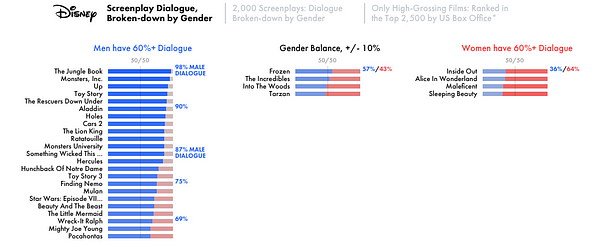
Light itself played a major role in Sunshine and deserves to be named as a supporting character in this film. It is enjoyable to bask in the endless cutaways of rainbow sheen. It is also wonderful to see a film with so many compelling female leading roles in light of the dearth of material historically available. (If anyone doubts this please read the data available regarding film dialogue broken down by men vs. woman)
This film might have had the audience pondering whether plants have morality or if bacteria feels pain. Instead we gawk at a deer-like creature with flowers for antlers or squirm at truly monstrous effects of cross-breading. It is as if this director has turned to the interests of a 12 year old boy pulling the wings off flies in the guise of focusing on philosophical/ scientific questions. Hopefully this is a passing phase. Unfortunately interesting ideas and progressive casting fail to deliver a garland to Garland. A lighthouse is no good without a lighthouse keeper.

Monday, January 22, 2018

Phantom Thread (2018)


Phantom Thread (2018)
Folie À Trois


Already, he was dreaming of a refined solitude, a comfortable desert, a motionless ark in which to seek refuge from the unending deluge of human stupidity. Huysmans’ Jean des Esseintes, the protagonist of “À Rebours”
Dial me a Valentine, She’s a smooth operator,It’s all so calculated, She’s got a calculator, She’s my soft touch typewriter and I’m the great dictator; Two little Hitlers will fight it out until, One little Hitler does the other one’s will………. Elvis Costello, Two Little Hitlers

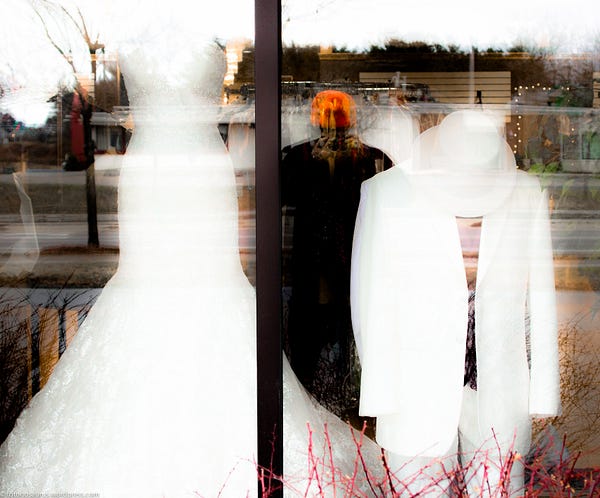
A renowned tailor is ill and collapses on a wedding gown recently completed for the Princess of Belgium. His staff of seamstresses must work all night to repair the damage done to the dress. This might be called the “action sequence” in Paul Thomas Anderson’s Phantom Thread. The film is about a love affair between an English couture designer and his muse, a stunning tabla rasa. This might not seem the grist for high drama but in the hands of master craftsmen (and women) anything is possible. Anderson, and his ensemble of top talent, manages to make a profound statement with a minimal plot peopled with dreary characters. The press has rightly paid tribute to the leading man, Daniel Day Lewis, but it is the sorority of Vicky Krieps and Lesley Manville that makes the production sing. This fragment of a romance between an obnoxious egoist and a myopic striver rises to be a meditation on love, work, passion and artistry.

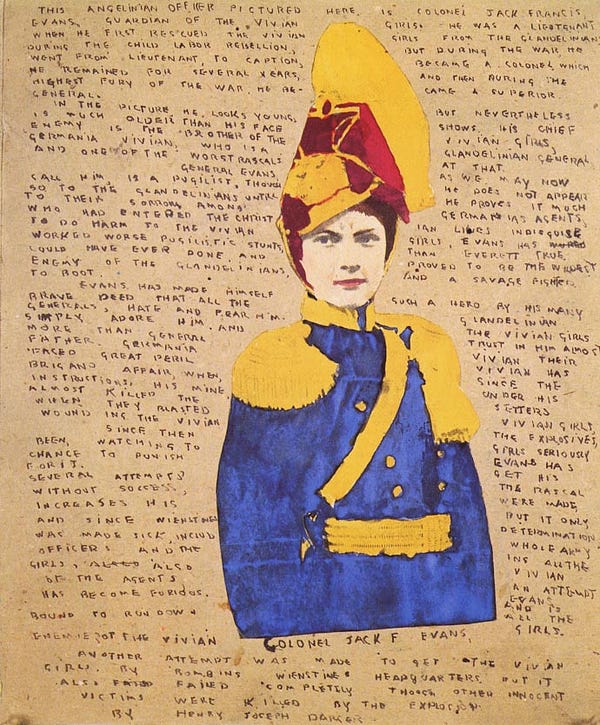
One of the thousands of pages from Darger’s notebooks

Many extraordinary people find basic social interaction to be abhorrent. Then there are those who must create their own world to interface with the outside. A third party, an army of factotums or a beleagured relative, must be always on hand to translate their needs to a bemused public. The protagonist in Phantom Thread is part of this unhappy tribe. The lucky ones retreat and become hermits accepting a solitary existence. Their work is discovered after their death. An example would be the collage-artist Henry Darger, who spent his childhood in abusive institutions. He lead a radical as a hermit working menial jobs until dying of old age in obsurity. His multi volume notebooks illustrated his imaginary world of armies of litte girls battling civil war soldiers. He had a difficult life, but it might be crueler to be someone such as the artist formally known as Prince. He died of a drug overdose in an elevator in his self-designed music fortress. His body was discovered after many hours by his dedicated staff. They knew he was in trouble, but his idiosyncratic rules prevented anyone from saving him. Reynolds Woodcock, the protagonist in Anderson’s feature, is the spiritual brother of this musical dynamo.

The opening sequence gives us the two main characters and their unhappy household in post war London. Reynolds is a master couture dressmaker. His sister, Cyril, is the business manager. There is also a third wheel, a girlfriend. One senses she is the latest in dynasty of unhappy models who serve brief tenures as companion and muse. The sister does the dirty work of delivering the news, that her services are no longer desired, while the brother retreats to a refuge in the country. These establish their roles. This is a “foilie a deux”. The sister is his manager whose sole purpose in life is to indulge the work-horse brother and watch the bottom line. She loves him, in her way, but business is paramount. He has license to be myopic and rude. Into this dystopian marriage comes a replacement muse for their fashion empire, the “House of Woodcock.” Alma, brilliantly played by Vicky Krieps, is the coquettish waitress in the country inn. He orders everything on the menu. He is famished and he asks her to dinner. He will devour her and everything she serves him. This breakfast encounter is a sample of the tour-de-force technical execution of the story by director and his team. Reynolds’ fawning combined with Alma’s blushing has the facade of a Norman Rockwell tableaux coupled with the gravitas of a Vermeer still life. The minimalist story glides on in the hands of consummate professionals who give the perfect tint to the clothes, the correct amount of shade to the setting and the right amount of background noise or music.
This film plot, rather than being the centerpiece, is simply the thread that weaves a tapestry of intense moments. This is a work of glances, rather than dialogue. Anderson’s writing and direction have been acclaimed but it turns out the auteur also worked as his own cinematographer. Is this film somehow autobiographical? Obviously this director knew EXACTLY what he wanted and put together a team of masters: from the gaffer (Michael Bauman) to the camera operator (Colin Anderson) to the costume designer (Mark Bridges) and myriad department heads. One need not be an expert in mid-twentieth century English fashion shows to know that this is a picture perfect rendering of such an event. The position of the chairs, the age and dress of all the participants, the choreography of the models, all speak to hours of combing over old photos and a days spent in libraries reading source material. All the homework renders an delightful visual feast of convincing detail.

The tenderness between Alma and Reynolds morphs into the gothic as Reynolds reveals himself, his art and his demons. The exposition reveals a childhood of loss coupled by a harsh apprenticeship as a dress-maker. This is all at the hands of his doting widower mother. He copes by fastidiously mastering his craft. He tells of rituals involving sewing mementos into the lining of garments, such as a picture of his mother in the jacket he is wearing. The woman was certainly attentive and deserves praise, but clandestinely wearing mom on his chest? One senses Norman Bates might have done the same thing if he had the talent. The overt darkness falls when the innocent is led to the dressing table as Reynolds mood shifts from suitor to cattle handler. One suddenly realizes what hunters mean by “dressing” an animal. This is an initiation rather than a date. Alma is stripped to her underwear and measured. Anderson choose to convince rather than shock so there is no nudity or sex in the entire film. Alma is both offended and intrigued. Is this how rich people behave?


Alma stands at the butcher-block alter of the fitting room. The honor of being chosen by a world renowned designer overrides a mammalian desire to seek refuge. Despite her best efforts the fear shows through the muslin. The terror increases with the arrival of the assistant tormentor. Cyril fails to introduce herself. Why waste time when this encounter is probably a one night alteration. There is no escape for the callow waitress as his beloved sister literally sniffs her out. Cyril inhales and comments on Alma’s perfume. Alma is so taken aback she thinks she might be smelling something else and comments, “we had fish for dinner”. The artist begins his artistry and shoves a notebook in his sisters hand. She dutifully scribbles Alma’s measurements. The harshness of the brother’s treatment of Alma and Cyril, coupled with the sister’s indifference makes for an excruciating few minutes. Reynolds pressing the tape measure intercut with close-ups of the sister writing the numbers hammers the home the dehumanization ritual. She passes the test and becomes a subordinate member of their cliche.

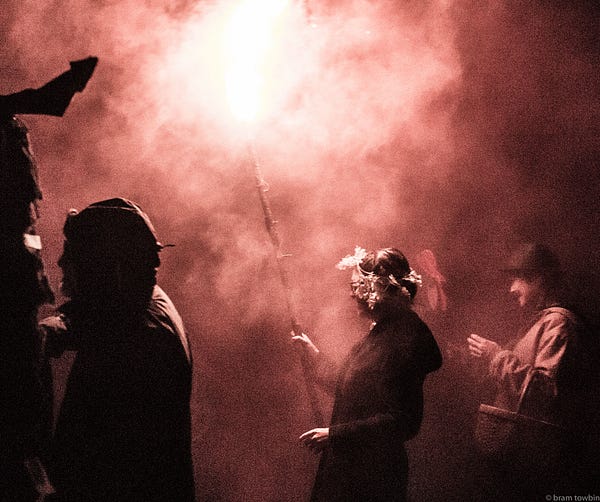
Alma’s ascension from the obscurity of the provinces, to the height of the London fashion scene. One would expect her to covet her new-found wealth more than her mentor. His charm might fade in direct proportion to her intimate knowledge of the man himself. His dressmaking virtuosity equals his contempt for anyone, or anything, that fails to match his mood or prevents him from working. These traits are coupled with a deranged obsession with his dead mother and devotion to his misanthropic sister. Given Reynolds’ disposition, it would be natural to assume that Alma’s interest might be in the castle rather than the king. In fact the film hints at her coming betrayal. There is a constant cut away to her divulging an inside view of the House of Woodcock to an attractive young doctor. This physician is also treated with contempt by her sick husband. Alma’s supposed infidelity narrative culminates in her DEMANDING to go dancing on New Year’s Eve shortly after their marriage. Unbeknownst to Reynolds she has been invited to a party by the handsome doctor. She abandon’s her obstinate husband who prefers to bring in the New Year drawing dresses. She is soon on the dance floor in one of his magisterial garments, amidst a magnificent pageant. The celebratory spectacle is itself couture artistry (Kudos to set designer Veronique Melery). Reynolds frets and paces in the manner of a jilted sophomore and finally goes to the party. He watches her jealously as the huge paper mache incarnations swirl. There is suddenly a disturbance. One of the live puppets stumbles nearly hitting Alma. There is the suggestion of some drunken violence. He rushes to her rescue. She has escaped, unaided, to safety. There was never any doctor in the house. Reynolds arrives expecting to be hailed as a white knight; or at least given proper deference for his concern. She is having NONE OF IT. She glares. But ironically it is the wrath of love. The whole scene is constructed with the expectation of a revelation of an affair or a relationship-ending showdown. The result is a strange affirmation of their bond through the strife of discontent and disapproval. She knowns his love is exclusive to his mother. His trade is a fool’s errand to secure the admiration of this, long dead, woman. She knows she must begin the laborious process of winning him back. This is her painful, humiliating path to love. One can understand her ambivalence at his supposed gallantry. It is merely the suggestion of affection, which she knowns is absent. After all, she is not a dress.


Undermining expectations is the phantom thread that permeates the film. The audience is led to thinking that this aesthete sophisticated couple will use the provincial waitress as a temporary muse. Instead the mysterious hay-seed co-opts the city slickers. A conventional film would paint her as a social climber interested in the glitz and power. Eve in the seminal All About Eve is the paradigm of the ambitious ingenue who betters the sophisticates. Alma is a striver, but her desire is as unworldly as Reynolds’ passion for dresses. She genuinely falls for the master tailor. She loves him. The normal cycle of having the muse be discarded is undone by the fact that she is as alien as her husband and his sister; in fact more so. At least they possess a backstory. We have only the fact of her German accent and lowly station in life to build an understanding of her. Alma is never asked about her history and there is no exposition revealing her roots. How did she end up in a English village? What is her nationality? Is she a refugee? She, on the other hand, studies her charges to the same degree they physically measure her. She understands their deficiencies while they are oblivious to her aspirations. She is treated as someone who should be seen, but never heard. The brother and sister mistake her for a child. She is really the parent.

There is a telling moment when a Belgian princess arrives to be fitted for her wedding dress. Reynolds has crafted the garments for all the benchmark moments in her life: baptism, confirmation, coming out… Alma is dutifully playing her part as dresser amongst the sea of bridesmaids and Reynolds’ asistants, who have matching uniforms. She walks up to the princess, who is being fitted. Although Alma is dressed as a senior member of staff she introduces herself to the royal and adds, “I live here”. It is a watershed moment in a film that is replete with brief conversations, glances and non-verbal exchanges. It is so quiet that a casual observer might mistake it for merely an odd aside. Certainly Reynolds and Cyril think of her as merely a dedicated cog in their machine. Alma certainly has had a special status up to this point, but is as if she were a family pet hovering in the background. Alma’s mission to be a Woodcock takes on an air of a religious pilgrimage. Normal people might be interested in marrying into the family. She wants the family. Her “love” is a Romantic sublime rather than the careful sentiment of a bourgeois spouse . Although the plot is Dickensian, the ardor is pure Emily Bronte. She is Heathcliff in his desire for Catherine. This isn’t about the here and now, but rather eternity. Alma’s small passing phrase — “I live here” — might be more accurately translated as “I am the house and the people in it”.

When Reynolds finally proposes, her immediately answer is… silence. He is forced to ask again. She seems hesitant in her acceptance. Her pause is rooted in knowing she has formed an unbreakable bond by assuming the role of his new mother. This was achieved through nearly killing him. As an adult with conventional standards of morality Alma’s putting her mentor/husband at death’s door is abhorrent. In the context of a eternal religious act she is merely playing her rightful role. She is the guilty innocent while he is the culprit victim. The artist is held captive by a righteous mother defending her child. The twist, however, is that she is the one causing him to be sick. Munchausen syndrome by proxy, a disease where caretakers purposely make their charges ill in order to come to the rescue, is not a conventional path to love. Unfortunately Reynolds is so damaged, there is no other choice but to make him physically in need of a pampering mother. It is pure madness, but how else could she establish herself as the new matriarch?


Alma’s fierce parenting goes beyond cuddling. She knows how to protect her charge on the playground. This fierceness is shown when Cyril forces Alma and Reynolds to attend a pre-wedding party for a rich patron. The client, in one of Reynolds’ creations, collapses in an alcoholic stupor on to the banquet table. Alma feeds Reynolds’ outrage that this woman should dare disgrace the house of Woodcock by wearing her vulnerability for all to see — while wrapped in one of his signature creations! You may wear one or the other, but not both. Whereas the enfant terrible, never used to doing the heavy lifting, might have stewed in anger, Alma organizes the cavalry. They burst into the client’s bedroom and Alma tears the dress off the comatose woman, much to the chagrin of the lady-in-waiting. The scene has the air of a stern mother taking back her son’s favorite toy from a playground bully. It ends with an exuberant Reynolds carrying his love, the garment, down a London street. Alma is also by his side. His joy extends into the following morning’s meal, a time when our boy is usually notoriously cranky.

The breakfast scenes, of which there are several, are the showcase for the brother-sister alliance. In addition they become the stage for Alma’s steady climb up the ladder. The sister plays her pampering role and tries to reprimand Alma for being too forward. Alma completely ignores the warnings, in fact she doubles down with opinions that define her as a distinct person, rather than merely a toady. Anderson, purposefully, never lets their rivalry come to a boil, as the this is a film about simmering. The two actually respect and admire each other. Cyril senses this new muse is different and can possibly be relied on to assume the burden of managing the brat. There is a confrontation over sending for medical help for an ailing Reynolds that show another of Alma’s clever calculations. Reynolds, despite his illness, refuses a doctor. The doctor retreats after Reynolds curses him out. The medicsheepishly leaves while addressing BOTH women as Miss Woodcock. They reply, IN UNISON. The doctor exits. One expects a kerfuffle and instead there is… silence. A silence that speaks to Alma’s new role as the brother’s protector. Cyril accepts the facts on the ground as Alma bolts the door to her brother’s room. This resignation is probably coupled with relief. The truth is Cyril find the suffering Reynolds… insufferable.

Reynolds’ childishness comes to the fore when a client rejects him. Cyril must endure his tantrum which is coupled with an admonishment to her for not revealing that this customer is going to a rival. Cyril responds to her brother’s whining with a curt, unsympathetic dismissal. Reynolds becomes unhinged and in a line reminiscent of the TV comedy “Arrested Development”, cries out “I’ve made a terrible mistake”. He is referring to his marriage. In the middle of the tirade Alma, stealthily, walks into the office. Cyril fails to mention the entrance and the new bride hears every word. Reynolds suddenly realizes his wife is within ear-shot but simple goes on with his attack. In the end Alma and Cyril CALMLY ignore him and go about their business. Reynolds, in a childlike whimper, carps at their unnerving politeness. His horrendous behavior is their fault. In short, the adults carry on and let the baby have a good cry. In effect Alma has superseded Cyril as the primary caregiver. The old nanny appreciates someone else carrying the burden.


Phantom Thread is a gorgeous dark fairy tale that culminates with, yet another, upending of expectations.There are stylish monsters that move in a world of princesses and aristocrats. There are magic potions, of a sort, and a wonderful fairytale ending that is imbued with melancholy. Alma has demonstrated she is clearly as deranged as her mad tailor and his sister/manager. The closing reveal of Alma’s dreams makes us wonder whether her prince might have been better off remaining as a frog. The modern day version of The Frog Prince story has the Princess kiss the amphibian in order to trigger the metamorphosis into a handsome man. Anderson seems to channeling the original version where the frog is smashed against a wall. The cudgel that bashes the House of Woodcock is hewned of a bourgeois provincial fantasy. Alma dreams of pushing a perambulator accompanied by Reynolds. As the audience we know that the the happy family tableaux is sew together by the excesses of three extremely damaged people. A house covertly divided against itself, cannot stand. The logical extension of this twisted love story is that Alma might not be able to reverse the occasional attempted manslaughter. Going “too far” might provoke suicide, or murder suicide, or double suicide. The exterior, however, is exquisite. But the Woodcock castle sits in a pristine setting. Why linger on the horror when you can take in the scenery.

The 1950s London portrayed in this film is replete with beautiful cars, houses, people circulating in a well ordered, hand-crafted world of bespoke objects. There is no hint that a decade before bombs were raining down, possibly from Alma’s native land. Unpleasantness might still be at hand but it a world away from the drawing rooms of one of the aristocracies’ favorite dressmaker. We are in a beautiful place with extraordinary people dedicated to making the most beautiful garments in the world. This sort of passion can produce art that takes us all to the sublime ecstasy. One need not know the artists struggle to relish the work. But we need to recognize that this sort of unworldly dedication comes at a steep price. Anderson puts a beautiful veneer on a story about isolation, drudgery and unhappiness. Krieps, Day-Lewis and Manville deserve a long standing ovation for making these desperate people so dignified in their absurd struggles. Cyril’s determined stare is a paean to the plight of those who serve artists. Alma captures the terrifying, yet beautiful, glow of the true believer. She is the Joan of Arc of high couture. Reynolds is the prophet with the power to make silk from a sow’s ear. And yet we are talking about… dresses. Ah yes, but what dresses!

Is it worth the struggle? Most compassionate people would applaud Cyril leaving the incestuous cult to pursue a career that allowed self-actualization. Alma would be better off with a true partner, than a madman who needs a episodic brush with death to remain faithful. Reynolds would do well to put down his sewing needle, forget about his mother and smell the roses before his partner is indicted by the authorities. Unfortunately normalcy is never an option for those touched with an unearthly gift that, in turn, is a curse.

One of Morton Bartlett’s dolls

The real life Morton Bartlett would have been a contemporary of the fictional Reynolds. This mid century, American graphic designer spent all of his free time creating exquisite, lifelike plaster dolls of children. He painted them and hand made all their clothes. This fastidious work culminated in him staging the dolls in dioramas representing domesticity. For nearly three decades this was his labor of love. He suddenly stopped after a magazine ran a story on his hobby entitled “The Sweethearts of Mr. Bartlett”. He carefully wrapped up his creations in newspapers and placed them in custom made wooden boxes. He died as he had lived, alone in his obscurity. His work was rediscovered after his death.

Anderson’s fairytale imagines Morton being dragged into the limelight, forcing an intimacy outside of his art. The movie asks whether dolls, or dresses, or photographs, or films… are worth a life. This question might not have resonance with an average person, but it means the world, literally, to those whose being is their craft. There is no other path. That is the triumph and tragedy of this grim fairy tale. Enjoy the beauty and know that peoples’ essence goes into making extraordinary things. We wish for their sanity and might feel guilty in enjoying the fruits of their pathology. But we owe them applause in recognizing the other worldly accomplishments. In the end this fleeting nod of recognition gives them a glimmer of satisfaction before work is begun on another dress or doll or painting or photograph or movie.
It has been said Mr. Lewis is leaving acting and that this is his last film. I’m sure Anderson, Krieps and Manville have battled similar urges. This is the plight of all who reach for perfection. We hope that Mr. Lewis is happy in his retirement…. But as an audience, we might have Cyril’s dark desire to keep the act moving. We share more with these people than we want to admit. We all appreciate a well made dress… and a well made film. No nudity, no pyrotechnics, no violence, little cursing, no gore, a trace of a plot, no sex, minimal dialogue, no special effects, monomaniacal characters and yet… it was riveting. A master at work.

Saturday, December 09, 2017

Ladybird (2017)

Ladybird (2017)
Sacramento Dreamin’

It is generally supposed that Conservatives are usually old people, and that those in favor of change are the young. That is not quite correct. Usually, Conservatives are young people: those who want to live but who do not think about how to live, and have not time to think, and therefore take as a model for themselves a way of life that they have seen.
-Leo Tolstoy, The Devil

Ladybird, ladybird, fly away home,
Your house is on fire,
Your children shall burn!
- Nursery Rhyme

Don’t you worry about me. I’ll always come out on top.
- Pippi Longstocking

Greta Gerwig’s “Ladybird” is a high school, coming of age film featuring a heroine. Since the 1950s this genre has highlighted the male experience. In the seminal “Rebel Without a Cause”, the mid century paean to American teenage disaffection, Natalie Wood was a breathtaking side-show to James Dean’s brooding main event. There is no mistaking Gerwig, as writer/director, has given birth to a woman’s world. Christine, whose self chosen nom de guerre is ‘Ladybird’, is the centerpiece of a sorority that buffets against authority figures, who happen to be mostly women. Although the film focuses on adolescent self- realization, it manages to paint this struggle as both dignified and hilarious. It brings to mind “The Breakfast Club”, a less accomplished 1980s film about misfits breaking down the school’s caste system. “Ladybird”’s carefree zeitgeist is closer to an earlier feature, the cultural juggernaut “American Graffiti”, a hagiography to post-war Pax Americana. They share a protagonist’s small town California roots and the post senior year decision to follow their manifest destiny to a fancy East Coast college. These are very different films as the 1976  blockbuster stuck to lighter themes and relied on a catchy soundtrack of recycled hits from the previous decade. It was wonderful cultural candy and its mass appeal spawned the mega hit TV Show “Happy Days”. “Ladybird” is a quieter, more substantive work that abandons the fraternity without sacrificing fun. It pushes the envelope on what can be cinematically accomplished, both in and out of high school. There is scientific evidence that girls mature faster than boys (http://www.telegraph.co.uk/news/science/science-news/10529134/Girls-really-do-mature-quicker-than-boys-scientists-find.html ). Gerwig is proof that this truism leads to more satisfying dramas about the delicate twilight-zone of late childhood.

The opening sequence of “Ladybird” shows our hero and her mother in a car on the outskirts of their hometown Sacramento. They are returning from a tour of nearby colleges. They are sobbing as they listen to a the final scene in a books-on-tape reading of “The Grapes of Wrath”. It is a passing moment but it speaks to the ironies that are revealed as the film progresses. The Steinbeck classic features dust bowl refugees fleeing to the promise land of California. Ladybird’s family are the metaphorical children of those hardscrabble pioneers. Their existence is certainly better than depression era Oklahoma. They do not face starvation or locusts, but their economic and emotional status is precarious. The mother works two shifts as a psychiatric nurse. Her meager salary supports her husband, a laid off computer technician, their adult son and his live-in girlfriend, in addition to Ladybird.  Needless to say the matriarch is stressed. The daughter is oblivious to her family’s struggle. She is consumed by her world; or more precisely - the suggestion of wealthy, cosmopolitan living. 

On paper, the responsible mother would seem more sympathetic then a narcissistic teen daughter. Gerwig’s brilliant writing/directing combined with Saoirse Ronan’s embodiment of the character unleashes Ladybird’s charm. This performance is a tour-de-force rendered even more incredible when you consider the actress is able to completely hide her Irish brogue and European mannerisms. Her character’s ripostes, whether delivered by dialogue or gesture, overpowers the matriarch’s endless carping. Ditto for the attempts by siblings, teachers and counselors to temper her spirit. Ladybird is loveably defiant, even when she’s wrong. The numerous scenes with the parochial school authority figures highlight her uncompromising individualism. What makes these scenes memorable is the teachers stretch far beyond their habits and priest collars. They are part of the larger dynamic which goes against the conventional approach in this genre. The 1980s classic, “Fast Times at Ridgemount High", teachers are mere set-pieces that function to highlight the “real” drama surrounding the students. “Ladybird” contains numerous miniature sketches of the various faculty. Although these people are secondary to the drama, the audience cannot help being swept up in their own stories. The traumatized priest who directs the school plays is a histrionic man with a gothic backstory. There is a sense of comic grief when he exclaims, remarking on the audience reaction to his work, “they don’t get it”. Ditto when he exclaims “YES!” at the conclusion of The Tempest, which is directed by his stand-in, the football coach. That person’s one brief scene is comically mesmerizing as he applies sports metaphors to stage direction. Everyone is respectful as, unbeknownst to Ladybird, this is a caring institution. The adults in the audience realize, through life’s endless waves of institutional indifference, what a special cocoon our heroine is experiencing. The embodiment of this ideal is the headmistress. This cheerful old soul is gracious towards all of her charges. She is especially indulgent of Ladybird’s various tresspasses. She is the mirror image of the principle in Wes Anderson’s “Rushmore”. That character is the stock disciplinarian who expels the iconoclastic high school hero after a particularly grievous prank. In “Ladybird” the mother-superior laughs off the heroine’s grand misdeed, even adding a self-deprecating joke. This is part of the warm background in which two pivotal relationships ebb and flow. The arc of the film revolves around what it means to be a good daughter and faithful friend.

It is common in many dramas for mothers and female friends to be subjugated as background to the male love interest. Gerwig tenderly relegates boyfriends as comic relief to highlight the importance of sorority. More significantly it is the women who provide the critical mentoring. Ladybird’s brother’s girlfriend briefly shares a post Thanksgiving cigarette which subtly sheds light on the mother’s generosity. This plants the seed that behind being an annoying scold, this overburdened woman, has a heart. This is not a blanket pardon for her mistreatment of Ladybird, but rather an important plot point that shapes our understanding of the complicated mother/daughter strife. The most significant life lesson ironically comes from a truly awful character, the wealthy girl who briefly usurps her connection with her true friend. In both cases the writing is succinct but brimming with detail that would have exhausted pages of dialogue with a lesser writer/director. The pool scene is particularly well executed. The heretofore slick worldly classmate morphs into a provincial bore with a few pointed questions. Once again Gerwig, although employing stock characters, always manages to provide small, careful details to generate empathy. Ladybird’s second boyfriend is a rich pretentious, sophomoric, jerk, yet the brief shot of his father passed out in the chair in the middle of the day is a potent reminder of the limits of money can buy. One cannot help but contrast this sad drunk with Ladybird’s own unemployed father. He might have given up hope for himself, but carefully puts up a cheerful front. This is what real father do. Ladybird is startled to learn he is on anti-depression medication and that he notices her insistence that she drop him off, in his second hand car, at least a block away from school. She has her adolescent appearances to manage. Becoming an adult means recognizing the cruelty of your actions. This is coupled with the even more painful knowledge that others known your faults, but stay silent out of kindness. No doubt she has many such realizations which leads to her reconciliation with her true friend. Behaving properly is not to please others, but to be a better person. Good deeds are a heartfelt affirmation of what really matters in a world of harsh serendipity. 

The latter part of the film gravitates from the safety of adolescent adventure to the adult world of economic hardship. The emotional cost of being ambitious is played out on a number of fronts. Some characters are able to continue school, while others must work. Some get jobs and other remain unemployed. It is all handled without long speeches or maudlin outbursts. This film has a taught sense of storytelling. A small example is the brother who is a different race. This is never mentioned. Is he a step brother from a previous marriage? Is he adopted? The writer/director never touches the subject, which shows a confidence in mastering the material. Another example would be the brief eye-contact between two family members, who suddenly realize they are competing for the same job. The significant moment revealing raw emotion plays beautifully. A lesser artist would assume the need for emotional fireworks. Yet the pithy execution of these scenes and plot points are at the heart of the wonderful craftwork behind this film.

There is, however, a problem with the final sequence. The mis-fire centers around the moment Ladybird realizes a life long dream. Up to this point all the critical infrastructure of the storyline carried itself on it’s own weight. It was a seemingly lighthearted walk in a maze of adolescent self-indulgence, delivered with the crispness of an auteur at the top of her game. The closing of the film drifted into being an overt parable. Ironically the earlier sequence, when the class produces Shakespeare’s “The Tempest”, has a recitation of the closing monologue. Prospero breaks character and asked the audience to free him with applause. The reading comically contrasts the a ham-handed, high school reading, with the Bard’s magical words. It works because it doesn’t work. The inverse might be true for our heroine at the finish line. What is shown is the logical extension of the life’s lesson, and yet it “breaks character” with the rest of the film. A better choice might have been to borrow from the final scene in “American Graffiti.” Richard Dreyfuss looks out from the airplane and sees what he’s been chasing all along… the beautiful blond woman in the T-Bird Convertible. They both go their separate ways… but we know that’s the way it’s supposed to be. We are blessed in this film to have Ladybird as the protagonist. She would look out on Sacramento with a broader view and understand the limits of beautiful people and pretty cars. It’s a girl thing.